
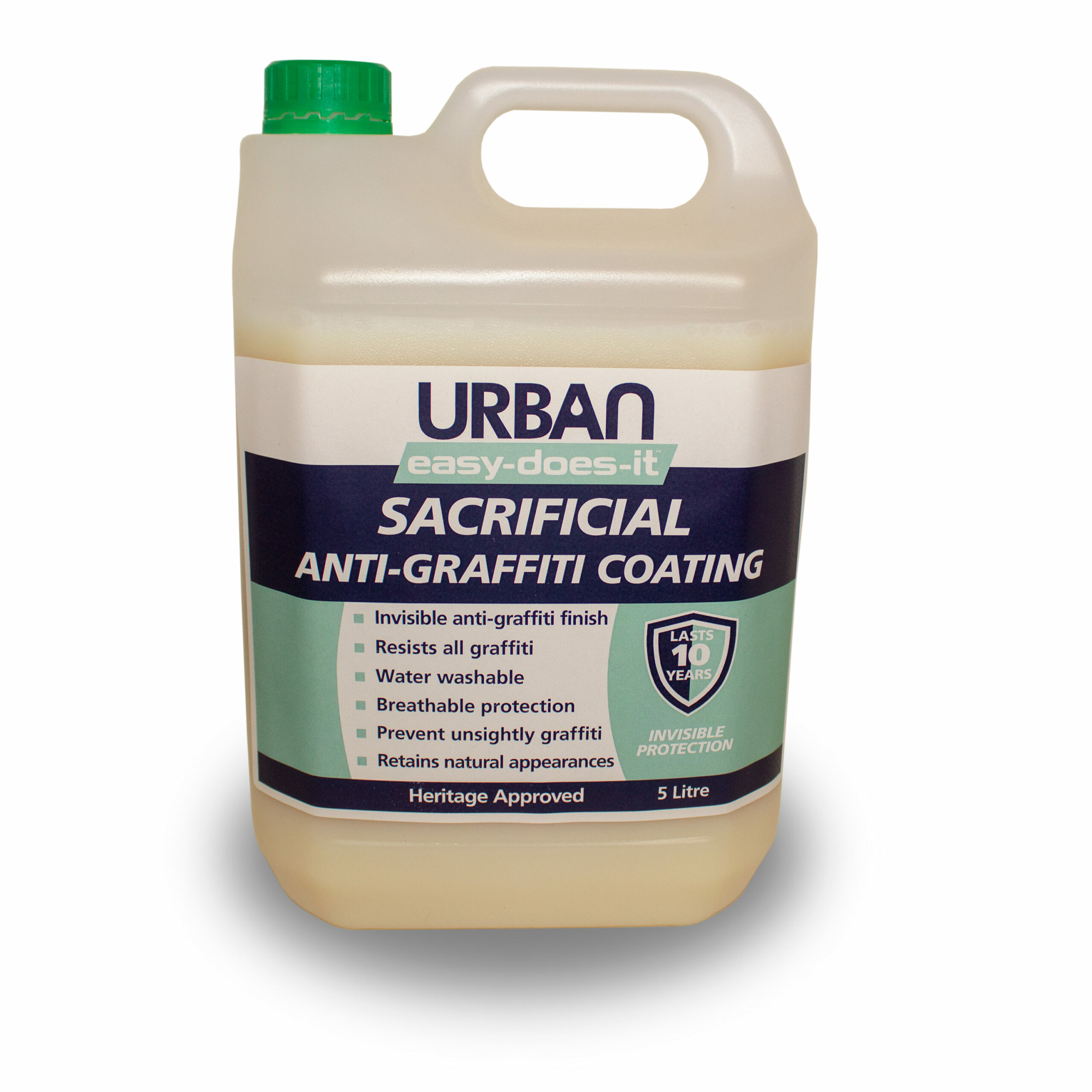
Sacrificial Anti-Graffiti Coating
Invisible sacrificial anti-graffiti coating for brick, stone and concrete. Wax-polymer, breathable and silicone/fluoropolymer-free. Won’t darken or “wet-look” natural masonry. Apply brush or low-pressure spray (2 coats). When tagged, remove graffiti and the film with hot water pressure-wash, then re-apply.
Have a question?
Overview
Sacrificial Anti-Graffiti Coating is a clear, wax-polymer barrier for heritage and natural masonry where appearance matters. Once applied it is almost imperceptible and won’t darken, discolour or create a “wet-look” on stone, brick or concrete. The breathable film resists marker and paint. When graffiti occurs, hot water pressure-washing removes both the graffiti and the coating in one step—then simply re-apply to restore protection.
Key benefits
- Invisible finish: maintains natural stone/brick tones; retains architectural character.
- Breathable: moisture-vapour permeable; suitable for mineral substrates.
- Low-impact chemistry: silicone- and fluoropolymer-free; wax-based and reversible.
- Simple maintenance: remove graffiti with hot water; re-coat the cleaned area the same day.
- Versatile application: brush or low-pressure spray; two coats typically required.
Where to use
- Listed buildings, heritage stonework and monuments
- Natural brick, concrete, terracotta and other mineral masonry
- Areas where a permanent “glaze” is not desired
Application
- Ensure the surface is clean and dry (slightly damp is acceptable when re-treating after wash-off).
- Apply by brush or low-pressure spray to saturate the surface.
- Apply two coats, allowing 3–4 hours between coats. Do not apply below 5 °C.
Coverage (guide)
- Polished surfaces/tiles: 3–6 m²/L
- Un-polished & porous surfaces: 2–5 m²/L
- Brick, concrete, terracotta: 2–5 m²/L
Graffiti removal
Pressure-wash with water at ~90 °C, 80–90 bar. Graffiti and soiling are removed together with the sacrificial film. Re-apply to restore protection.
Notes & limitations
- Vertical surfaces only.
- May dull polished surfaces—always test an inconspicuous area first.
Additional information
| Weight | 5 kg |
|---|---|
| Size | 5ltr |
-
Type: Sacrificial, wax-polymer anti-graffiti coating
-
Appearance: Invisible; won’t darken / “wet-look” natural masonry
-
Breathability: Moisture-vapour permeable
-
Chemistry: Silicone-free; fluoropolymer-free; reversible
-
Application: Brush / low-pressure spray; 2 coats; 3–4 h between coats; >5 °C
-
Coverage (guide): 2–6 m²/L depending on porosity
-
Removal: Hot-water pressure-wash (~90 °C at 80–90 bar); same-day re-apply
-
Substrates: Brick, stone, concrete, terracotta, tiles
-
Use: Heritage & natural masonry where clear glazes aren’t acceptable
-
Notes: Vertical surfaces only; can dull polished areas—test first.
Frequently asked questions
Will it change the appearance of stone or brick?
No—once applied the film is almost imperceptible and won’t darken or “wet-look” natural masonry. Always test first.
How do you remove graffiti from a sacrificial system?
Use hot-water pressure-wash (~90 °C at 80–90 bar). The graffiti and coating wash off together; re-apply to restore protection.
Is it breathable?
Yes—moisture vapour permeable, so it’s suitable for mineral substrates like stone and brick.
Does it contain silicone or fluoropolymers?
No—formulated silicone-free and fluoropolymer-free.
How is it applied?
By brush or low-pressure spray to saturate the surface. Apply two coats with 3–4 hours between coats; > 5 °C only.
What’s the coverage?
Typically 2–6 m²/L depending on porosity (e.g., brick/terracotta 2–5 m²/L; polished tiles 3–6 m²/L).
Can it be used on polished or horizontal surfaces?
It can dull polished surfaces and is for vertical use only—test a small patch first.
Can we re-apply the same day after cleaning?
Yes—same-day re-application is supported after wash-off.
Related products
-
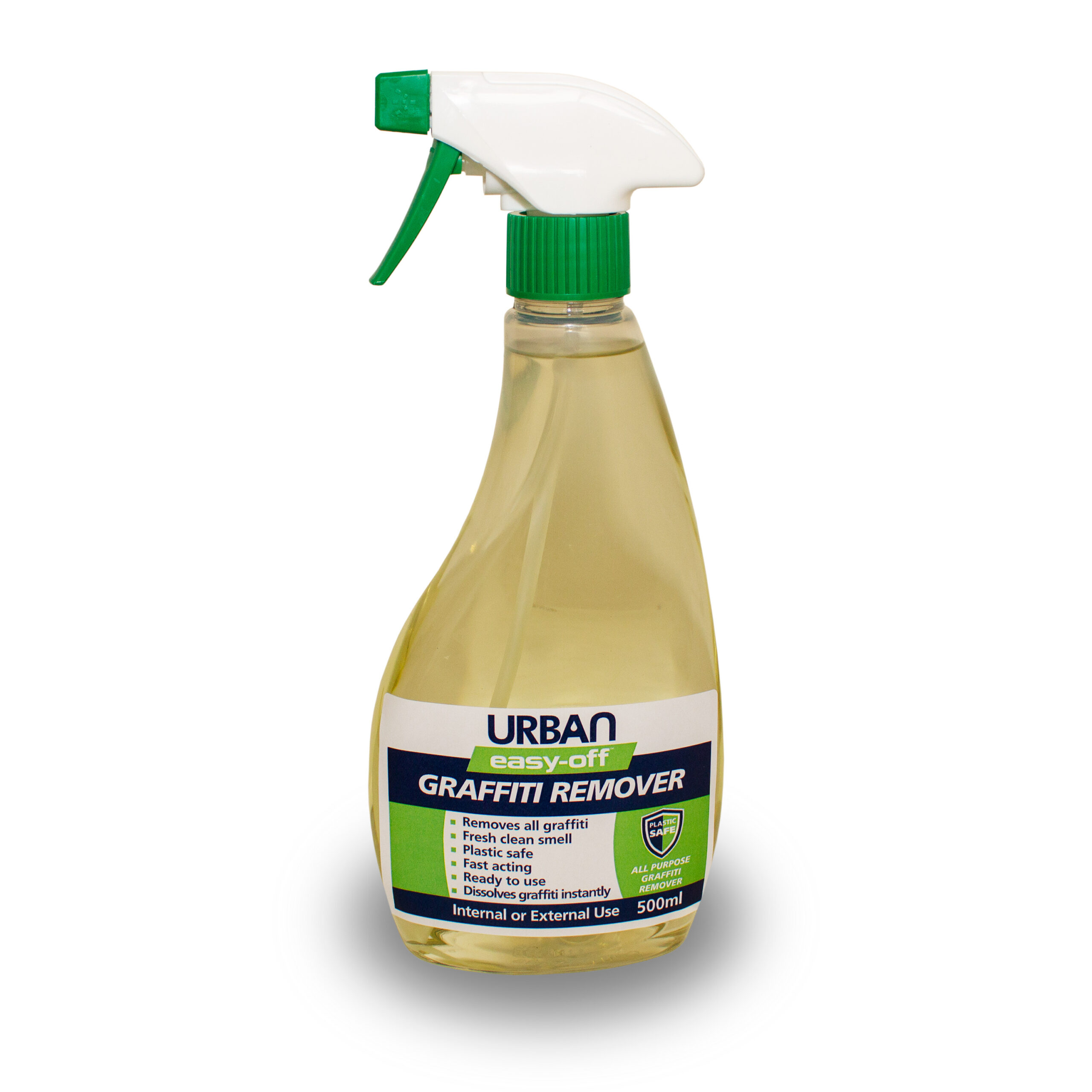
Graffiti Remover Spray
Fast-acting graffiti remover spray for non-porous and many porous surfaces. Plastic & polycarbonate safe, biodegradable and…
-
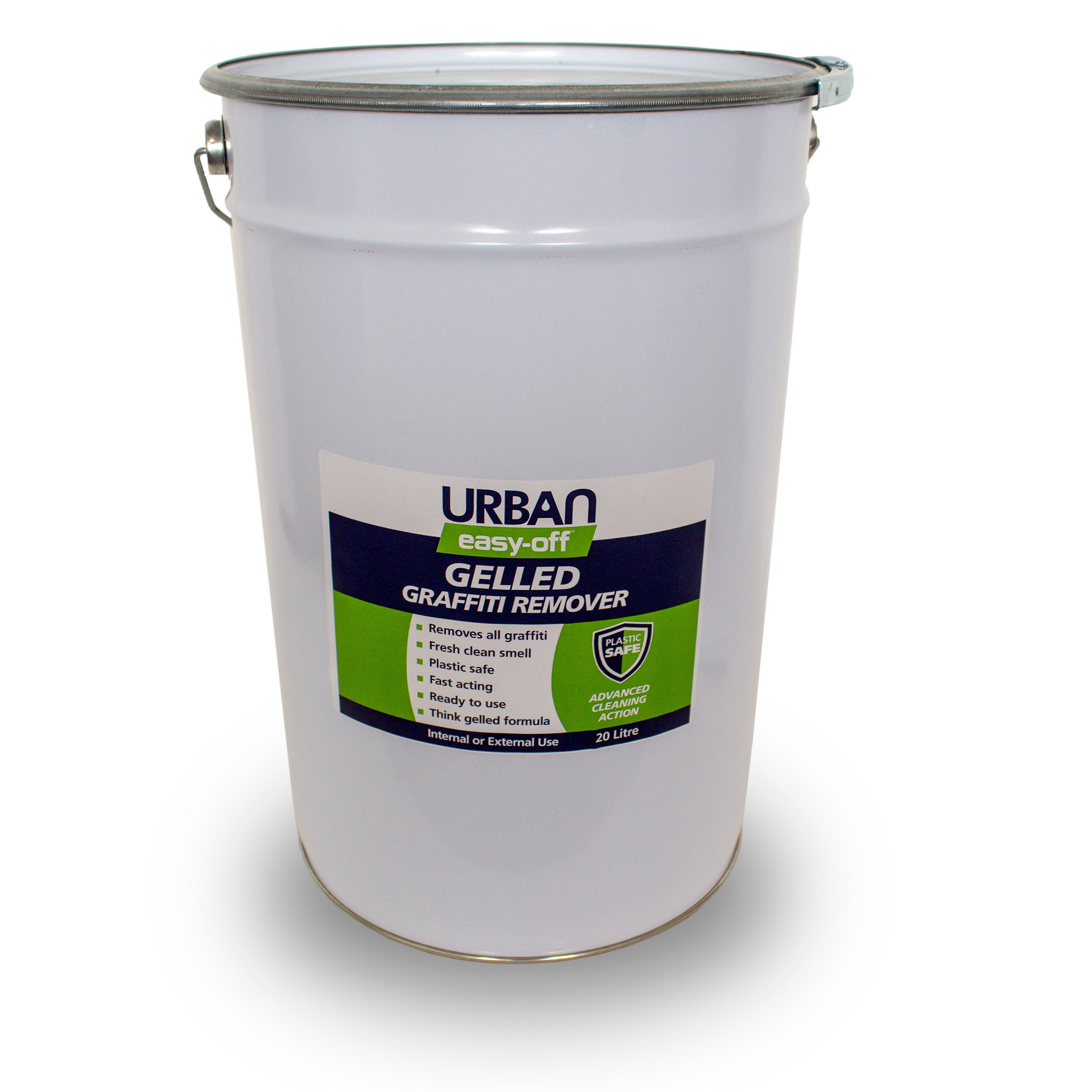
Graffiti Remover Gel
Industrial-strength gel “easy-off” graffiti remover for porous and non-porous surfaces. Thick gel formulation ensures long contact…
-

Graffiti Removal Kit
A fully recyclable “easy-off” graffiti removal kit for smooth hard surfaces: contains safe graffiti remover, wipes,…
-
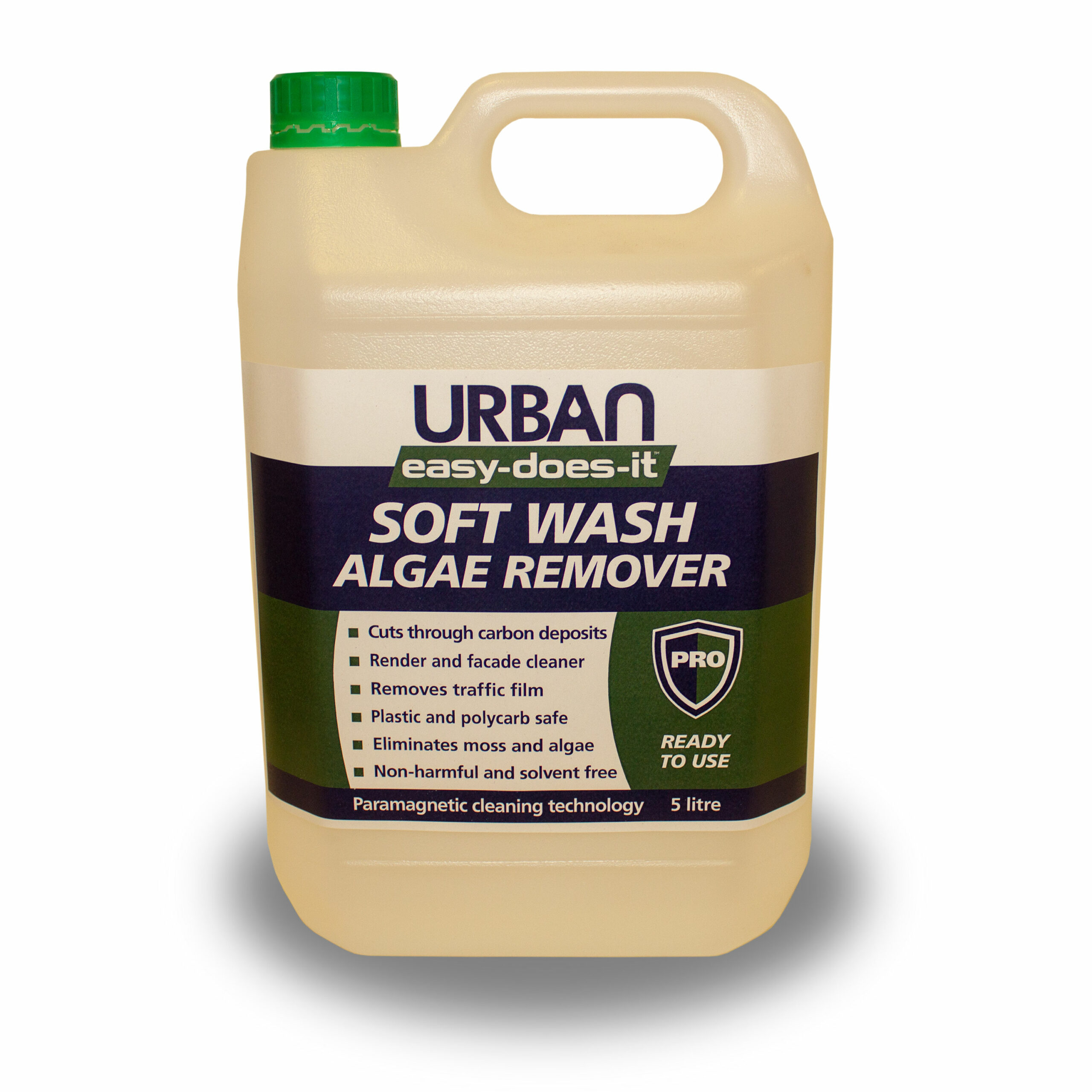
Algae Remover
Deep-action façade/render cleaner with powerful biocide and paramagnetic cleaning tech. Kills algae, moss & lichens, breaks…
Who we support
Trusted across public, professional and creative sectors
Urban Hygiene products protect public spaces, transport networks, managed estates and creative projects across the UK.
Our customer base
- Local authorities
- Transport
- Housing associations
- FM companies
- Artists
- Contractors
- General public