

Strong Graffiti Remover
Heavy-duty graffiti remover for stubborn, aged paint on brick, stone and concrete. Brush it on, keep it wet, then rinse thoroughly, ideally with a pressure washer.
- Penetrates deep into spray paint, basecoats and ink
- Made for professional and local authority anti-graffiti teams
- Masonry only: not for plastics, paint, glass, aluminium or galvanised metal. Test first.
Not sure this is the right product? Help me choose
Have a question?
Overview
easy-off+ Strong Graffiti Remover is a professional-grade, high-strength graffiti remover for porous masonry. It takes over where our standard easy-off Graffiti Remover leaves off: stubborn, weathered or layered graffiti on brick, stone and concrete.
It penetrates deep into graffiti paint, blisters spray paint and dissolves ink-based marks so they can be rinsed away. It also removes spray paint basecoats. It is made for graffiti removal companies, contractors and local authority anti-graffiti teams who need clean walls quickly on bridges, subways, service yards and other repeat-tag locations.
Choosing the best graffiti remover for concrete or brick comes down to how porous the surface is and how old the paint is. For fresh tags, start with a standard remover. If that is not cutting through, or you need an industrial graffiti remover for brick and concrete from the outset, this strong graffiti remover is the next step.
Why choose it
- High strength: for aged spray paint, basecoats and difficult inks where general removers struggle.
- Masonry specialist: made for porous brick, stone and concrete, including textured and absorbent surfaces.
- Deep penetration: works into the pores and blisters spray paint, so it rinses away more easily.
- Fewer passes: reduces repeat passes and labour on deep-seated tags.
- Simple method for crews: paint on, agitate, leave to work, rinse.
- Full safety data sheet supplied with each order.
Where to use it
Use it on porous mineral masonry: brick, stone and concrete. Typical settings include subways, bridge abutments, retaining walls, perimeter walls, service yards, rear alleys and pre-handover clean-downs on refurbishment projects.
Do not use it on paint, zinc (galvanised metal), aluminium or glass, as it will damage them. It is not suitable for plastics, including polycarbonate, or for delicate coatings. On smooth, coated or plastic surfaces, use a plastic-safe multi-surface remover or graffiti wipes instead.
How to use it
- Prepare: put on your PPE. Brush off loose dirt and debris. Protect nearby glass, metalwork, painted surfaces and plastics, and pre-wet surrounding vegetation.
- Test: try a small area first to check the result on that surface.
- Apply: brush it on with a brick cleaning brush or alkali-resistant brush, and work it well into the surface.
- Keep it wet: keep agitating and apply more product if needed. Do not let it dry. Start with a short dwell and increase it as needed for the substrate, temperature and paint thickness.
- Rinse thoroughly: good rinsing is essential. Ideally use a high-pressure, low-volume washer at 69 bar (1,000 psi) and 18–25 litres per minute, with a 15–45° fan tip. Water up to 70°C may help but is not essential. Without high pressure, scrub while hosing at low pressure.
- Repeat on very heavy build-ups, or spot-treat remaining areas. If a shadow remains, follow with Graffiti Stain Remover.
Choosing a size
Strong Graffiti Remover comes in a 5 litre container, the contractor standard, with the full Safety Data Sheet. For bulk quantities, contact us and we will advise.
Good to know
- It is corrosive. The Safety Data Sheet classes it as causing severe skin burns and eye damage, and harmful if swallowed. Use it with care and the correct PPE.
- PPE: alkali-resistant gloves, safety glasses and protective clothing as a minimum. Keep an eye bath to hand and follow your site risk assessment.
- Ventilation: make sure the area is well ventilated, especially when enclosed, and avoid creating mists.
- Run-off: do not let it discharge into drains or rivers. Contain spills with bunding and absorb them with dry earth or sand.
- Storage: keep containers tightly closed and upright, in a cool, well-ventilated place away from direct sunlight.
- Always patch-test before full use.
For smooth, coated or plastic surfaces, use Graffiti Remover. For shadows left in the pores after rinsing, follow with Graffiti Stain Remover. For bulk quantities or technical advice, contact our team.
Compare all our graffiti removers and removal products.
Additional information
| Weight | 5 kg |
|---|---|
| Size | 5ltr |
- Brick
- Stone
- Concrete and other mineral masonry.
Do not use on: paint or painted finishes, signage, galvanised (zinc) metal, aluminium or glass.
Not for: plastics, polycarbonate or delicate coatings. For plastics and smooth, non-porous surfaces, use a safe multi-surface remover or graffiti wipes.
-
Product: Strong Graffiti Remover
-
Strength: Heavy-duty
-
Substrates (best): Brick, Stone, Concrete (porous masonry)
-
Method: Apply → Dwell → Rinse/Pressure-wash
-
Use cases: aged/stubborn spray paint, deep ink; repeat-tagged areas
-
Not for: sensitive plastics/polycarbonate (use plastic-safe remover/wipes)
-
Follow-up (if shadows): Graffiti Stain Remover
-
Sizes: 5 L, 25 L
-
Audience: councils, FM, rail/transport, contractors
Frequently asked questions
When should I choose Strong Graffiti Remover?
Use it for stubborn or weathered tags—especially on porous brick, stone and concrete—when standard removers aren’t cutting through.
Is it safe for plastics or polycarbonate?
No—use a plastic-safe remover or graffiti wipes on plastics and polycarbonate. Always patch-test.
How long should I leave it to dwell?
Start with a short dwell and increase as needed based on substrate, temperature and paint thickness. Do not allow to dry out—reapply if required.
What’s the best way to rinse?
Rinse thoroughly with clean water. On masonry, a pressure washer often gives the best results.
What if a shadow remains on brick or stone?
Follow with a dedicated Graffiti Stain Remover to target ghosting in the pores.
Will it damage painted finishes or signage?
Yes, it can. Do not use it on paint or painted finishes, signage, galvanised (zinc) metal, aluminium, glass, plastics or polycarbonate. Use it on brick, stone and concrete only, and patch-test first. For other surfaces use Graffiti Remover Spray or Graffiti Wipes.
Which PPE do I need?
Gloves and eye protection as a minimum; consider additional PPE per the SDS and site risk assessment.
Can I use it on anti-graffiti coated surfaces?
Prefer the standard multi-surface remover on coated/smooth surfaces. This strong formula is targeted at porous masonry.
Any tips for vertical or textured areas?
Light agitation with a soft/nylon brush helps. Keep the area wet during dwell to avoid drying.
How should I store it?
Keep containers sealed, upright and in a cool, dry place away from direct sunlight. Follow SDS guidance.
Which surfaces should I not use it on?
Do not apply it to paint, zinc (galvanised metal), aluminium or glass, as it will damage them. It is also not suitable for plastics, including polycarbonate. Use it on porous brick, stone and concrete, and protect nearby surfaces before you start.
What pressure washer set-up works best for rinsing?
Good rinsing is essential. Ideally use a high-pressure, low-volume washer at 69 bar (1,000 psi) and 18–25 litres per minute, with a 15–45° fan tip. Water up to 70°C may help but is not essential. If you do not have high pressure, scrub while hosing at low pressure.
Works well with
-
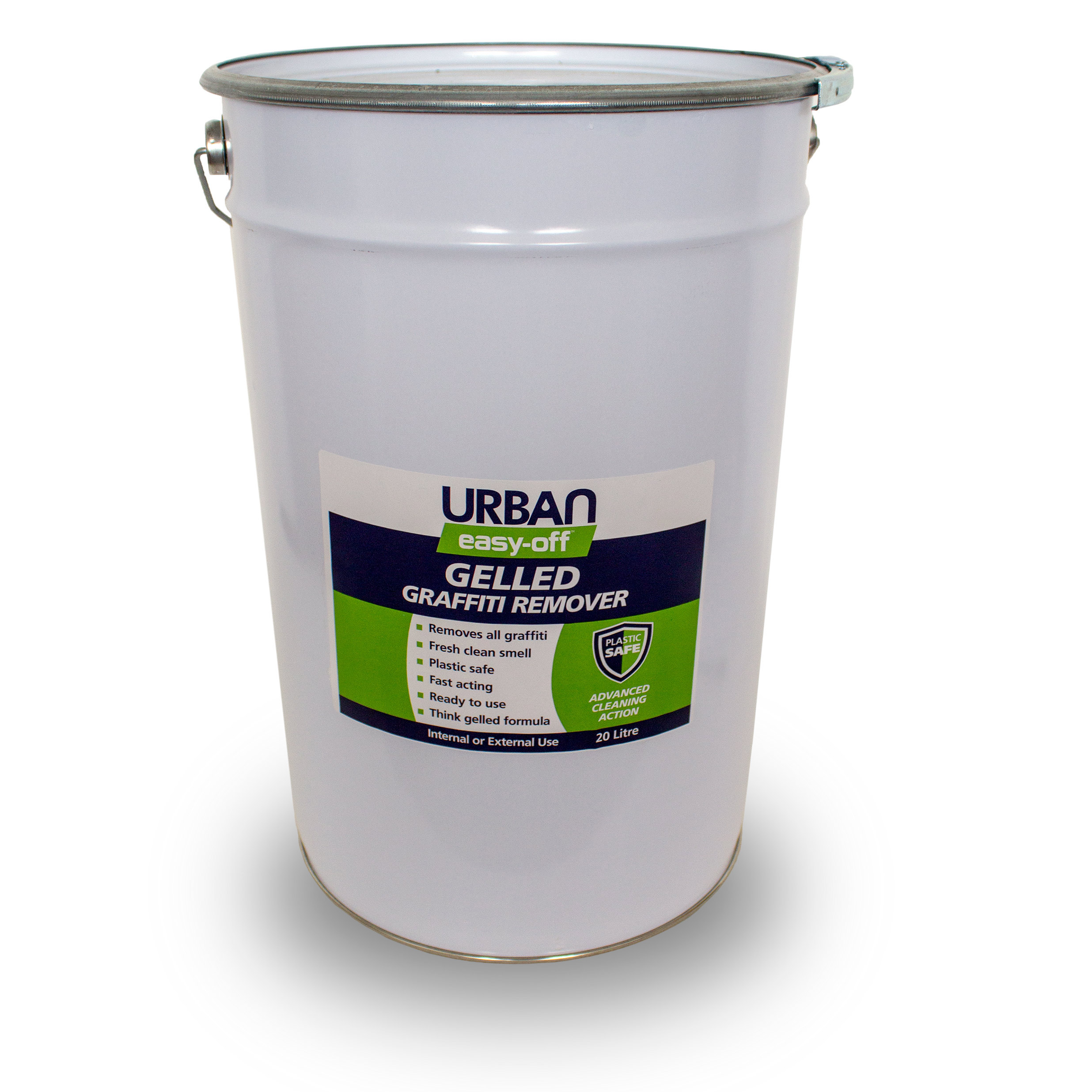
Graffiti Remover Gel
Thick, ready-to-use graffiti remover gel that stays in contact with the graffiti for longer. Brush or…
-

Anti-Graffiti Coating
Stop graffiti soaking into your walls. This permanent clear gloss glaze lets spray paint and marker…
-
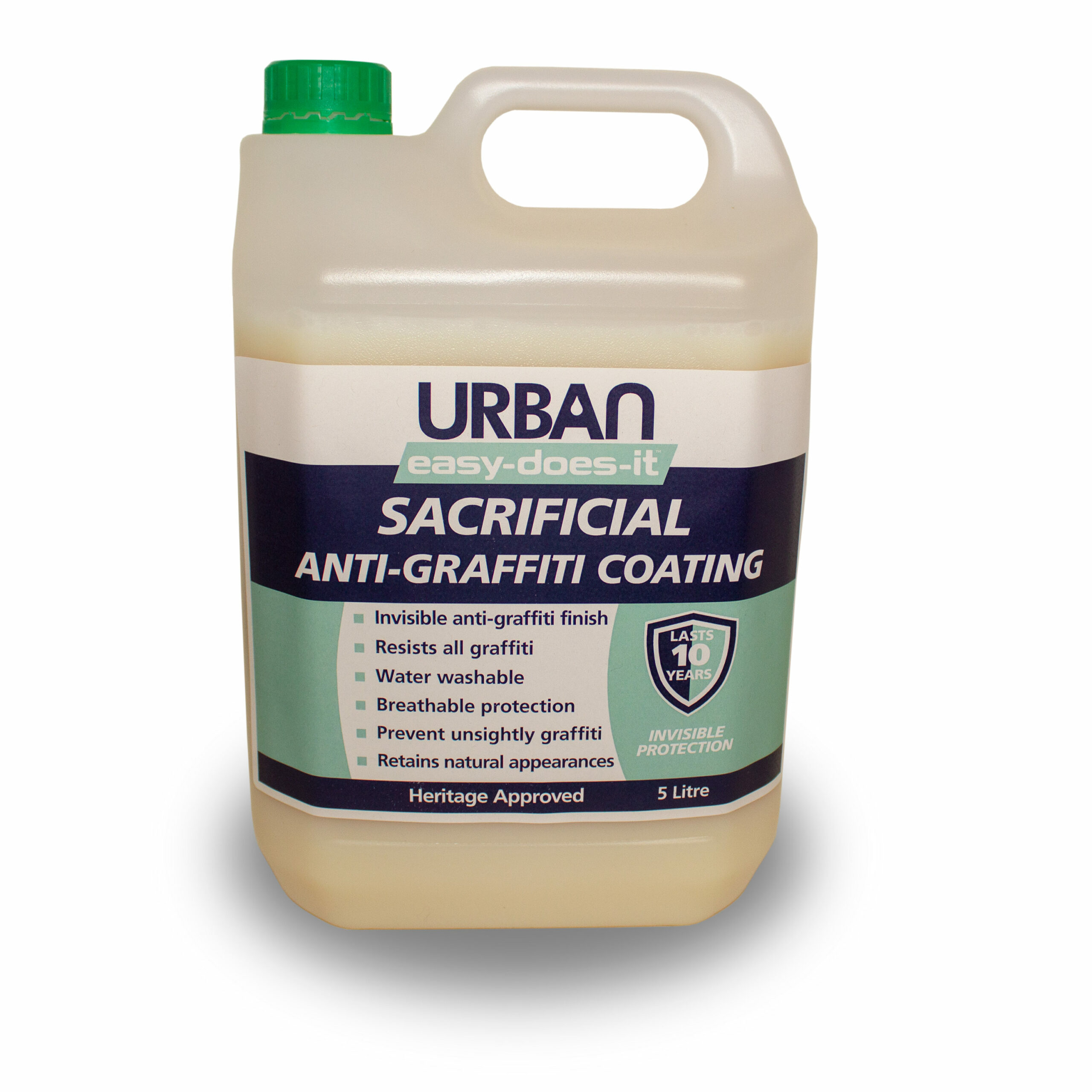
Sacrificial Anti-Graffiti Coating
Protect natural brick, stone and concrete without changing how they look. Graffiti washes off with the…
Who we support
Trusted across public, professional and creative sectors
Urban Hygiene products protect public spaces, transport networks, managed estates and creative projects across the UK.
Our customer base
- Local authorities
- Transport
- Housing associations
- FM companies
- Artists
- Contractors
- General public